Saturday, March 5, 2016

A Time for Tanning- Summer in Algarrobo

With it's 6,535 km (≈ 4,061 miles) of coastline, Chile has a ton of beaches. Of all of these beaches, Algarrobo is mine. Ok. Go ahead and ask it. My what? My favourite? Like mine as in I own it? Well, by mine I mean the one I've spent the most time at. My beach. The one I know. The one I could never get lost at. Mi playa. 
    So after spending Christmas in el campo and January in Santiago, we headed to Algarrobo, my beach. I have talked about it before, on a lot of occasions, but Algarrobo's different in the summer than any other time of the year. It's fuller, warmer, busier, and funner. Complete with little touristy shops, empanadas with cheese and shrimp, churros filled with manjar, sunsets, and sandy runs. Our daily plan was always "tratando de conquistar el mundo", which basically consisted of reading, tanning, shopping, tree climbing, and swimming. Perfect for a relaxing end to my summer in Chile. 
   Saying that makes me sad. A relaxing end. I don't want it to be the end! I don't want to admit that I only have 3 months left. It's been a lifetime of a year, but I feel like I just got here!! I need another year. I know that's what every single exchange student says, but I didn't think that I would. Well, here I am. I DON'T WANT TO GO BACK TO THE US!! Ok. Everyone in the US reading this please know that I love you all. Nothing personal. I just don't want to go back. Just not yet.  
But I did have a really good time in Algarrobo.

Algarrobo beach.

While we were there, there was like a week where the waves were really big and no one could go swimming.
It was still fun to play in the surf though. 


this is el pino at our beach house.
can you find me?
now el pino has a tree house. But I forgot to take a picture.

there I am.
from there I could see the waves on the beach.
Plus it's a whole lot cooler, and no one could bother me. ;b

the inside of our beach house.


we spent a lot of time with our little cousins
who were spending 2 weeks in my grandma's beach house.

this is the birthday party of the littlest one.
It was good to get to see the whole family again.
I got burnt. for like the 5th time though.


I bought these pants in down town Algarrobo. 

remember the part about beautiful sunsets??
oh. and they were over the ocean.


crazy moon!
because holding one's hand still while one takes a night picture is rather hard.
but it turned out rather cool looking

that's better.


do you like the shells in my hair? I got them done in Viña del Mar.
post coming soon

weekend beach excursions


Friday, March 4, 2016

Fact Friday #24- Sports I

The History of Soccer-

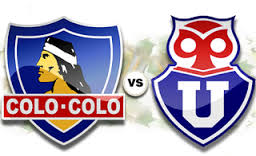
Originally brought to Chile by the British, soccer, or fútbol, is now the most popular sport. The original team was the Valparaiso Football Club, followed by today's best know clubs Colo-Colo (founded April 19, 1925) and the Universidad de Chile (founded May 24,1927). However, the national team of Chile is La Roja which won runner up in Copa America in 1955, 1956, 1979, and 1987, as well as bronze in the 2000 Sydney Olympics. In 1962, Chile hosted its first World Cup, exploding the soccer fever, and taking home third place.
The Federación de Fútbol de Chile was established in 1895 and is a member of both FIFA and CONEMBOL. It was a founding member of the first South American international championship, which is now known as Copa America, as well as a participant of the first world cup in 1930.
Today's team is ranked #12 in the world and coached by Claudio Borghi. Linoel Sanches has the largest number of games played (84), and Marcelo Salas is the best goal-scorer (37). (To view the whole team roster, visit http://www.footballtop.com/countries/chile/players#section-2.) Chile is also know for its incredible fans. Games average around 60,000 people, ranking them 21st of 203 teams.

Rivalries-

In Chile, there are two main fútbol rivalries. One between club teams, and one between countries. The first of these is between the Colo-Colo team and the Universidad de Chile. It is said to have started on May 12, 1940 when a member of Colo-colo punched a Universidad de Chile player for a particularly nasty foul. Now, both Santiago teams frequently play intense and highly contested derbies.
The second one is between the national teams of Chile vs. Peru. Caused by historical feuds and lingering bitterness, this rivalry is ranked the top 9th football rivalry in the world by CNN. Every year these two nations duke it out in the Clásico del Pacífico (“Pacific Derby”). These matches are notoriously rough, competitive and exiting; with players frequently being sent off. To make matters worse, the two countries traditionally fight for the #4 spot in South America (behind Argentina, Brazil, and Uruguay).

However, although the football matches between both teams are extremely intense, it is mostly for show. Chile recently began a new club team for people of Peruvian descent. On the other hand, these rivalries do make for exiting games for fans!

Friday, February 26, 2016

Fact Friday #23- Language II

Here are some tips for learning your host language as fast as possible. They're not necessarily just for exchange students.


Learning Spanish Before I Left-

Although my chileans were a really big help with my Spanish learning, it would have been nice to have spoken a little more Spanish when I had arrived. I did some of this stuff, but not as much as I should have. Some of them worked better for me than others, and will for you too. Here are a few tactics.
  1. Watch movies in your host language. Whether they are movies from your host country, or you just change the audio language in Netflix, it'll help a lot. Start with some movies for kids or action movies. The less complicated the plot, the better. I saw Jurassic World with my host sister when I arrived.
  2. Doulingo! Doulingo is a language learning app. It's really great, and the best part is that it's free.
 
  1. Talk to your host family in their native language through Whatsapp, Facebook, emails, whatever. It helps. Plus you can learn more about your host country, and family. 
  2. Listen to news, music, or books in your host language. Don't stress yourself with reading yet. Especially if it's a language like Spanish that has all the same letters as English. You just need the basics, but real reading comprehension will come later. 
  3. Talk to friends who speak the language. Don't be embarrassed. It's better to make mistakes with friends than with complete strangers. Plus your friends also speak english. 

Learning Spanish in Chile-

Ok, for me, I just kind of went with the flow and didn't try to hard. But that might not be the best strategy. 

The biggest thing is talking as much as you can in your host language. Try not to fall back on english and english speakers to much. A little bit at the beginning is ok, but try your best to stay away from getting into the habit. 
Some of my friends used flashcards, but I've never really been a flashcard person. Ask your host family for baby books, again, don't be embarrassed. Do what you've got to do. 
And finally, ask lot's of questions.

¿Quieres Saber Más?-

http://matadornetwork.com/notebook/21-funniest-expressions-chilean-spanish-use/ 
CIA county profile
Chile: The Expat's Gide
my friends in Chile

Wednesday, February 24, 2016

Mini Vacation- Villarica

     You know that one chilean volcano that exploded last year right? Sometime in northern hemisphere spring. The pictures were all over Instagram. Anyway, when I was just a freshman dreaming about chile, I saw the pictures. And I guess I kind of figured that the volcano was further south. Like in Patagonia. It seemed like all those tiny islands could easily house active volcanos. Ok, you may not remember the name of this elusive volcano, but it’s name is Villarica. And um, that volcano is in my region (like state). That means that its hell-a close to Temuco (where I live). It might seem scary to live next to an active volcano, but its just part of living in chile. I know for a fact that there are at least 3 others closer to Temuco than Villarica. So yeah. I think it’s kind of cool. My chileans don’t seemed fazed by it so it doesn’t bother me. 
     Anyway, a few weeks ago me and my family went and visited the town where this volcano resides. It’s a cute little touristy town due to the volcanic lakes that reside near by. Down this far there cold lakes, but if you go up the volcano more, there are hot springs, or so I'm told. The lakes are lovely. It's a nice thing to have a little break from salt water, and go back to normal sweet water. The only complaint that some people have, is that there aren't really beaches. And the few that do exist have black sand. But ehh. I can live with black sand. Plus it's cool that it's from all of the volcanic explosions. 
     We stayed with some primos of my chilean mom. They also had an exchange student from the US a few years ago, and their daughter went to Germany. So it was really cool to talk with them and swap stories. Plus my chilean mom no longer thinks I'm crazy for running around barefoot and eating "weird" things. It was a fun weekend.

one of the beaches in Villarica

same beach, different angle. note the black sand?

my camera doesn't do well with taking panoramas where there's boring stuff.
It only wants you to see the pretty stuff, so it skips over some of the middle parts.


 my chilean family <3
can you tell that I'm the only one who swam?


this is the volcano now
it's like a sleeping giant


chilean sunsets are amazing

Saturday, February 6, 2016

The Life that Could Have Been

     In a parallel universe on the other side of the world, in one tiny speck, a dot you won’t find on a map, there is a town. A tiny town cloaked in winter. Where it’s very cold. ___ to be exact. In the tiny town there are tiny, insignificant people, who might someday cure cancer or rule the world. These tiny people get up at 6:30 am, some earlier, some later, to go to a tiny school.  Somewhere in a parallel universe, there is an English 10 H adv class with an empty chair, waiting for a girl with her life that could have been.
     But, the girl is not siting in the tiny school, on her designated government order chair. She’s not in the front row knitting and listening to some teacher give a lecture about some book that only she read. The girl is in a parallel universe, on the other side of the world, laying in a tree.
Yes a tree. A pine tree to be exact. She is wrapped in a green blanket, letting the summer sun kiss her face and the morning breeze cool her sunburned back. She’s living a life that could have not been. Easily. Oh, so so so facilmente could have not been. And at this moment the tiny girl would rather be in the tiny pine tree than any where else in the world. Even Paris.

So the tiny girl gives you advice.

Don’t give up.
It’s worth it.
Oh, it’s so worth it.
Every tear.


Friday, February 5, 2016

Fact Friday #22- Language I

Differences from Spain Spanish-

Chileans use a lot of slang. This confuses all foreigners, including fluent Spanish speakers. For a culture where formal dress is the norm, one would expect the same of the language. However, it is not the case. Chilean Spanish is quite informal and vulgar, and many common phrases can be insults if used in the wrong text. Different websites will give you lists miles long of these “Chileanismos”. Here are just a few. 

Influence of Other Peoples-
The influence of the indigenous cultures and of the other immigrants to Chile is strongly felt in their version of the Spanish language, commonly referred to as “Chilean”. From the many idioms and Chilenismos, to the strong accents, Chilean is definitely made unique by its sub-cultures.

Bilingual Chileans-

Around 11% of Chileans are bilingual. Most people that are speak English, or an indigenous language.
Only upper class and highly educated Chileans speak English fluently. Outside of this around 10.8% of less do. Most young people however speak some because they learn it in school.

Idioms-

Chilean Spanish is full of idioms. Some of the best are below:
  1. To tell someone to mind their own business, you would say, “Salto lejos el mani.” Which literally means “Look how far the peanut jumped”.
  2. To tell someone that someone is in a bad mood, you say, “Tiene malas pulgas.” This literally means “He/she has bad flees.”
  3. Finally, to say that a meal was delicious, you say that it was “Chuparse los bigotes” or to lick my moustache.

The Accent-

I have heard the Chilean accent described in many different ways. Anywhere from, “It's the most universal Spanish accent” to “I took 2 years of Spanish, but when I first got there, I had no idea what anyone was saying.” I also have heard that it is really beautiful and sounds like Italian. But I've since found out that that's in Argentina. The one thing that everyone agrees on is that they talk super fast. I hardly notice it.